Australia
 Cayman Islands
 Dominican Republic
 Hong Kong
 India
 Indonesia
 Ireland
 Jamaica
 New Zealand
 Singapore
 Thailand
 United Kingdom
 United States
 Vietnam

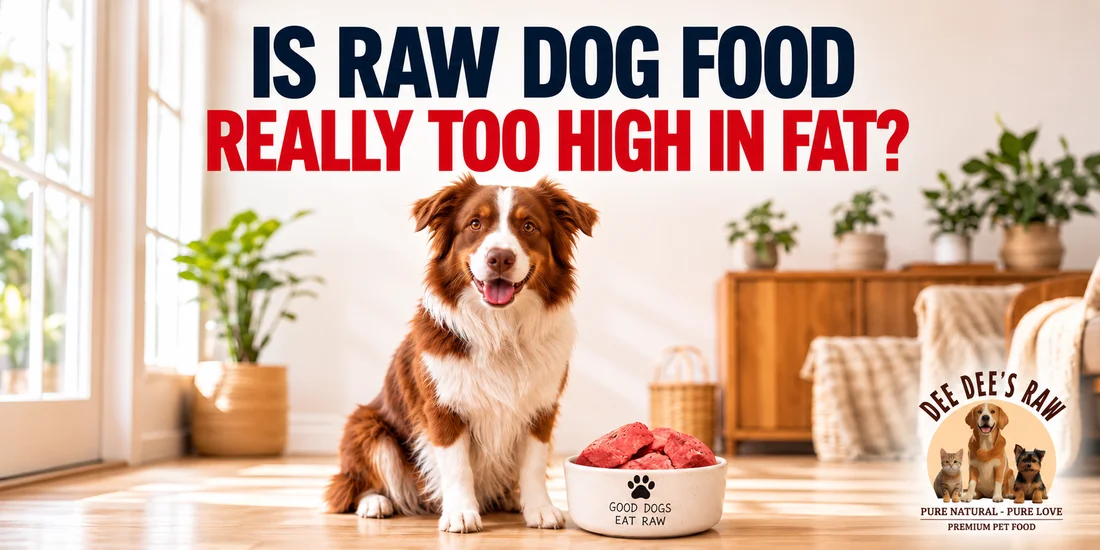
FAT ISN'T THE ENEMY — BUT THE RIGHT BALANCE MATTERS!
One question pet owners sometimes ask when considering raw feeding is whether raw dog food contains too much fat, especially for dogs that are overweight, less active or prone to gaining weight.
It's an important question, and one that deserves more than a simple yes or no.
At Dee Dee's Raw, we believe understanding what's in your dog's bowl is just as important as choosing what to feed them.
Let's take a closer look at dietary fat, why percentages on pet food labels can be misleading, and what really matters when it comes to maintaining a healthy weight.
FIRST, DOGS ACTUALLY NEED FAT!
Fat sometimes gets a bad reputation, but it's an essential part of canine nutrition.
Dietary fat provides concentrated energy, helps maintain healthy skin and coat, supports normal growth and development, and allows the body to absorb important vitamins, including A, D, E and K.
It also contributes to the flavour and appeal of food.
The important thing is providing an appropriate amount for your individual dog.
A highly active working dog may have very different nutritional needs from a senior dog who prefers spending the afternoon relaxing on the couch!
RAW FOOD VS. KIBBLE — WHY FAT PERCENTAGES CAN BE MISLEADING
Here's something many pet owners don't realize.
Comparing the fat percentage on a bag of dry kibble with the percentage on frozen raw food isn't necessarily comparing apples to apples.
The reason is moisture.
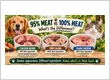
Dry kibble typically contains relatively little moisture, while raw meat naturally contains a substantial amount of water.
For example, imagine two foods:
A dry kibble containing 12% fat and 10% moisture.
A raw food containing 12% fat and 70% moisture.
At first glance, both appear to contain the same amount of fat.
However, when we account for moisture, the kibble contains approximately 13.3% fat on a dry-matter basis, while the raw food contains approximately 40%.
This doesn't automatically make either food good or bad. It simply demonstrates why understanding pet food labels matters.
It's also worth remembering that guaranteed fat percentages are minimum values, not necessarily exact measurements of the food.
For dogs managing their weight, overall nutritional suitability and total daily calorie intake matter more than comparing fat percentages alone.
DOES FAT MAKE DOGS OVERWEIGHT?
Not necessarily!
Dogs generally gain excess weight when they consistently consume more calories than their bodies use.
Those calories can come from fat, carbohydrates or protein.
However, fat provides more than twice as many calories per gram as protein or carbohydrates, meaning higher-fat foods can be particularly energy-dense.
This is why portion sizes are so important.
A raw diet isn't automatically a weight-loss diet, just as kibble isn't automatically responsible for weight gain.
Your dog's activity level, age, metabolism and total daily food intake all play a role.
And there's another factor that sometimes gets overlooked.
TREATS AND TABLE SCRAPS!
It's easy to carefully measure your dog's regular meals while forgetting about all those little extras throughout the day.
A few treats here, a piece of chicken there, and perhaps a little something from the dinner table.
It all adds up!
Those extra calories can make a surprising difference, especially for smaller or less active dogs.
WHAT SEVEN YEARS OF FEEDING RAW HAS TAUGHT ME
Over the past seven years, I've had the opportunity to feed raw food to many different dogs and cats, both at home and through my work in the raw pet food industry.
And one of the biggest lessons I've learned is just how important portion control can be.
In my experience, when an otherwise healthy adult dog starts putting on a little extra weight, reviewing their daily food intake and making a sensible adjustment can often make a difference.
For a larger dog, that might mean reducing the daily amount by approximately one ¼ lb portion, depending on how much they're currently eating.
For a smaller dog, the adjustment would naturally be much smaller.
Then I monitor their weight and body condition over the following weeks to see how they're responding.
If they're still gaining excess weight, I reassess their feeding amount and any additional treats.
And if they're getting too lean, I make adjustments in the other direction.
It's not about following a rigid formula. It's about paying attention to the individual animal.
Of course, not every weight issue is simply a matter of portion size. Some dogs have medical conditions or nutritional needs that require a more individualized approach.
But for many healthy adult dogs, sensible portions, consistent feeding habits and regular observation are an excellent place to start.
WHAT ABOUT CARBOHYDRATES IN KIBBLE?
Many traditional dry dog foods contain starches from grains, potatoes, peas or other plant ingredients.
These ingredients provide energy and help give kibble its familiar shape and texture.
Raw meat-based diets generally contain less starch, depending on their ingredients.
As a result, more of their dietary energy may come from protein and fat rather than carbohydrates.
However, fewer carbohydrates don't automatically mean fewer calories.
That's an important distinction, particularly for dogs that need to manage their weight.
HOW MUCH FAT IS IN DEE DEE'S RAW?
Not all raw dog food is the same.
Different proteins and recipes naturally contain different amounts of fat, depending on their ingredients.
At Dee Dee's Raw, we believe in being transparent about what goes into our blends.
Here are the guaranteed minimum fat percentages for our five main recipes:
Chicken Blend — 12.0% minimum fat
Tripe Blend — 11.3% minimum fat
Turkey Blend — 12.0% minimum fat
Beef Blend — 12.4% minimum fat
Lamb Blend — 15.0% minimum fat
These percentages are measured as fed, meaning they include the food's naturally occurring moisture.
It's important to understand that guaranteed minimum fat percentages aren't necessarily the exact amounts found in every batch.
For example, while Tripe Blend has the lowest declared minimum fat percentage, that doesn't automatically mean it's our lowest-fat or lowest-calorie recipe.
Likewise, Lamb Blend has the highest declared minimum, but we can't determine the precise differences in actual fat content from these minimum figures alone.
Choosing a suitable blend involves considering your dog's overall nutritional needs, not simply selecting the lowest number on a label.
IS YOUR DOG AT A HEALTHY WEIGHT?
One of the most useful ways to assess your dog's weight is through a Body Condition Score, commonly called BCS.
This nine-point scoring system helps identify whether a dog is underweight, at an ideal body condition or carrying excess body fat.
For most dogs, a score of approximately 4–5 out of 9 is considered ideal.
At a healthy body condition, you should generally be able to feel your dog's ribs without pressing too hard, see a waistline when looking from above and notice an abdominal tuck when viewed from the side.
If your dog's ribs are difficult to feel or their waistline is disappearing, they may be carrying excess body fat.
We have a helpful Dog Body Condition Score chart available for pet owners who want to better understand what these differences look like.
For a helpful visual reference, search for the Dog Body Condition Score chart or visit Dee Dee's Raw website for more feeding information.
The important takeaway?
Your dog's body condition and weight trends are more useful for evaluating feeding amounts than looking at a food's fat percentage in isolation.
WHAT IF YOUR DOG IS ALREADY OVERWEIGHT?
If your dog needs to lose weight, the first step is understanding their current body condition and establishing an appropriate target weight.
From there, focus on selecting a nutritionally suitable diet and measuring daily portions consistently.
For some dogs, gradual adjustments to feeding amounts and treats may be enough to help them maintain a healthier weight.
Others may require a more structured weight-management plan or a specially formulated diet.
Dogs with pancreatitis or certain other medical conditions may have additional dietary restrictions and should have their feeding plans reviewed by a veterinarian.
Significant weight loss should be gradual and monitored to ensure the dog continues receiving adequate nutrition.
Healthy weight management isn't simply about reducing the amount of food in the bowl.
It's about providing appropriate nutrition while achieving and maintaining a healthier body condition.
SIMPLE INGREDIENTS. TRANSPARENT INFORMATION.
At Dee Dee's Raw, our philosophy is straightforward.
We believe pet owners deserve to know what they're feeding their dogs and cats.
Our recipes feature animal-based ingredients such as whole bone-in chicken, turkey, beef, lamb, green tripe and liver, depending on the blend.
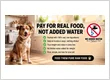
We don't add water, grains, preservatives or fillers.
Our food contains naturally occurring moisture from its ingredients, but we don't add extra water to increase product weight.
And with convenient approximately ¼ lb frozen portions, measuring your dog's meals is simple.
We also offer flexible ordering options, including 9 lb and 30 lb boxes.
As with any raw meat product, safe storage, thawing and handling are important to reduce the risk of harmful bacteria.
RAW FEEDING MADE EASY WITH DEE DEE'S RAW
We proudly offer locally produced raw dog and cat food, with FREE personal delivery throughout our service areas in the Lower Mainland and Fraser Valley.
There is no minimum order required.
Our delivery areas include Langley, Surrey, White Rock, Vancouver, Burnaby, Richmond, Coquitlam, Maple Ridge, Abbotsford, Mission, Chilliwack and surrounding communities.
Flexible subscriptions are also available, allowing customers to choose a delivery frequency that works for their household.
THE BOTTOM LINE — FAT ISN'T THE ENEMY!
Fat is an essential part of a dog's diet, but the right amount depends on the individual dog.
Rather than assuming raw food is too high in fat, or that a lower fat percentage automatically makes one food healthier, it's worth looking at the bigger picture.
Consider your dog's age, activity level, body condition, health and overall nutritional needs.
And remember those treats and table scraps!
Sometimes, the most useful changes aren't about switching foods at all. They're about paying closer attention to what, and how much, your dog is eating.
At Dee Dee's Raw, we're always happy to answer questions about our ingredients and share the nutritional information available for our blends.
Because feeding your dog well starts with understanding what's in their bowl.
Dee Dee's Raw — Pure. Simple. Raw. ❤️🐾
Locally Produced Raw Dog & Cat Food
FREE Personal Delivery Throughout the Lower Mainland & Fraser Valley
NO Minimum Order Required