Australia
 Cayman Islands
 Dominican Republic
 Hong Kong
 India
 Indonesia
 Ireland
 Jamaica
 New Zealand
 Singapore
 Thailand
 United Kingdom
 United States
 Vietnam

You turn the key, hear a click, and wait. Nothing happens. Or maybe your car starts in the morning, but by the time you head home, the battery warning light is glowing on the dashboard.
Sound familiar? These problems can be frustrating, especially when you have somewhere to be. Sometimes the battery is to blame, but the starter motor or alternator could also be causing trouble.
Both parts play different roles in keeping your vehicle running. Understanding what they do, and how to spot the early signs of failure can help you avoid unnecessary repairs and choose the right replacement when the time comes.
What Is Denparts.ca?If you're looking for replacement starters or alternators in Canada, Denparts.ca is one supplier worth checking out.
Denparts sells automotive electrical components, including starters, alternators, and generators. Its catalogue also covers parts for other types of equipment, from agricultural machinery and tractors to marine vehicles, motorcycles, and lawn and garden equipment.
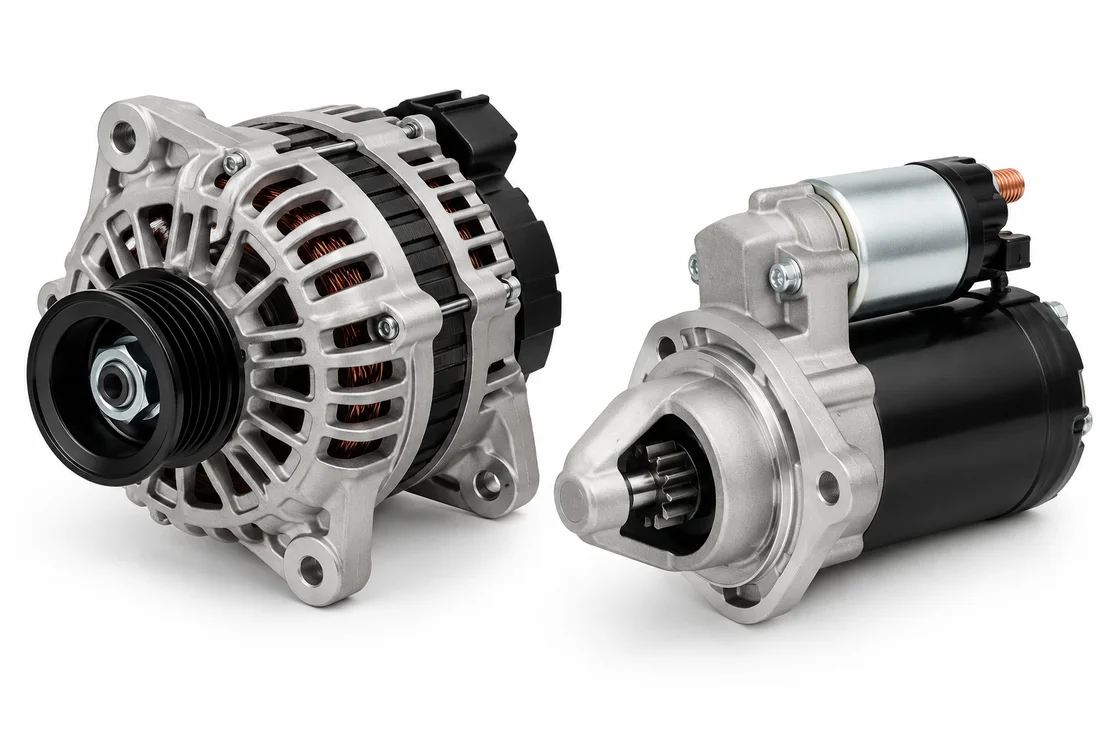
What Does a Starter Motor Do?Think of the starter motor as the part that gets the whole process moving. Your engine needs to turn before it can run on its own, and the starter provides that initial movement.
When you turn the ignition key or press the start button, the battery sends electrical power to the starter motor. A component called the solenoid engages a small gear with the engine's flywheel. The starter then spins the flywheel, turning the crankshaft and getting the engine ready to fire.
Once the engine starts running independently, the starter disengages.
The process usually takes only a few seconds, but it requires a substantial amount of electrical power. That's why a weak battery can sometimes produce symptoms that look like a starter problem.
Getting the engine started is only half the job. Once your car is running, it still needs electricity for the headlights, dashboard, air conditioning controls, engine computer, and other electrical systems.
That's where the alternator comes in.
The alternator generates electricity while the engine is running. It supplies power to the vehicle's electrical systems and helps recharge the battery, preparing it for the next start.
Without a working alternator, your car gradually uses up the electricity stored in the battery. You might not notice a problem immediately, but eventually the vehicle can lose electrical power or stop running.
How an Alternator WorksMost car alternators are driven by a belt connected to the engine. As the engine runs, the belt turns a pulley on the alternator, causing internal components to generate electrical current.
The alternator produces alternating current, which is converted into direct current for the vehicle's electrical systems. A voltage regulator helps keep the output within the appropriate range for the vehicle and its battery.
It's a fairly clever system, considering how much your car depends on it. The alternator is working in the background every time you drive, even when you aren't thinking about it.
Although these two components work together, they do very different jobs.
The starter motor uses power from the battery to turn the engine during startup. The alternator generates electricity after the engine is running and helps keep the battery charged.
Here's a simple way to remember it: the starter gets the engine going, while the alternator helps keep the electrical system going.
If you turn the key and the engine doesn't crank, the starter, battery, or their connections may be responsible. If the car starts but develops electrical problems while running, the alternator or charging system deserves closer attention.
These are useful clues, not definite diagnoses. A faulty alternator can leave the battery too weak to start the car, making a charging problem look like a starter failure.
That's why testing the battery and charging system before buying replacement parts is usually the smartest first step.
Why These Parts Matter More Than You Might ThinkIt's easy to overlook the starter because it only operates briefly when you start the engine. But when it fails, your car may not go anywhere.
The alternator has an equally important job. Modern vehicles depend on a steady supply of electricity for engine management, lighting, and numerous electronic systems. A charging problem can affect more than your ability to start the vehicle the next morning.
Both components also affect battery life. If the alternator isn't charging properly, the battery may repeatedly become discharged. Replacing the battery without addressing the underlying fault can leave you facing the same problem again.
In other words, identifying the actual cause matters just as much as choosing the replacement part.
Things to Consider When Buying a Starter Motor 1. Starter Motor PurchaseVehicle Compatibility: Check your vehicle’s year, make, model, and engine size.
Part Number: Match the replacement starter’s part number with the original.
Mounting and Connections: Ensure the mounting points, gear, and electrical connections match.
Quality: Choose a reliable brand and check product specifications.
Warranty: Review the warranty and return policy before purchasing.
Price: Compare prices without compromising on quality.
2. Alternator PurchaseVehicle Compatibility: Confirm your vehicle’s year, make, model, and engine size.
Part Number: Match the alternator’s part number with the original.
Amperage Rating: Choose an alternator with the correct amperage output for your vehicle.
Pulley and Mounting: Check the pulley type, mounting points, and belt arrangement.
Electrical Connections: Ensure the connectors and voltage specifications are compatible.
Warranty: Check warranty coverage and return conditions.
Should You Replace These Parts Yourself?That depends on your experience, your vehicle, and how comfortable you are working under the hood.
Some starter and alternator replacements are fairly straightforward for someone with the right tools and mechanical knowledge. Others involve awkward access, complicated wiring, or additional components that need to be removed first.
If you decide to do the work yourself, disconnect the negative battery terminal before starting and follow the vehicle manufacturer's service instructions. Both components connect to high-current electrical circuits, so careless handling can cause serious damage or injury.
If you aren't confident about the diagnosis or installation, have a qualified mechanic inspect the vehicle. Many repair shops can test the battery, starter circuit, and charging system before recommending a replacement.
Frequently Asked Questions1. How can I tell whether my starter or alternator is faulty?Pay attention to when the problem occurs. A clicking sound or an engine that won't crank points towards the battery, starter, or electrical connections. A battery warning light, dim headlights, or repeated battery discharge while driving may indicate an alternator or charging-system problem. Testing is needed to confirm the cause.
2. Can a bad alternator prevent my car from starting?Yes. If the alternator isn't charging the battery properly, the battery can eventually lose enough power that it can't operate the starter. In that situation, the immediate symptom looks like a starting problem, even though the original fault may be in the charging system.
3. What are the earliest signs of alternator failure?A charging warning light, flickering headlights, unusual electrical behaviour, or a battery that repeatedly loses charge can indicate an alternator problem. Unusual noises and burning smells are also possible warning signs. These symptoms can have other causes, so a proper inspection is important.
4. Is a bad battery the same as a bad alternator?No. The battery stores electricity and supplies the power needed to start the engine. The alternator generates electricity while the engine runs and helps recharge the battery. Either component can cause starting trouble, which is why testing both can prevent unnecessary replacement costs. Final Thoughts A car that won't start doesn't always need a new starter, and a battery that keeps dying doesn't automatically mean the battery itself is bad. The starter motor and alternator have separate jobs, but a problem with either one can leave you stranded. Paying attention to warning signs and getting the electrical system checked can help you find the real cause before spending money on parts you don't need. If a replacement is necessary, Denparts.ca is one place to explore for starters, alternators, and other automotive electrical components. Take the time to confirm fitment, compare specifications, and check the current warranty and return terms before ordering. A little checking upfront can make the difference between fixing the problem properly and dealing with the same frustrating starting issue all over again.