Australia
 Cayman Islands
 Dominican Republic
 Hong Kong
 India
 Indonesia
 Ireland
 Jamaica
 New Zealand
 Singapore
 Thailand
 United Kingdom
 United States
 Vietnam

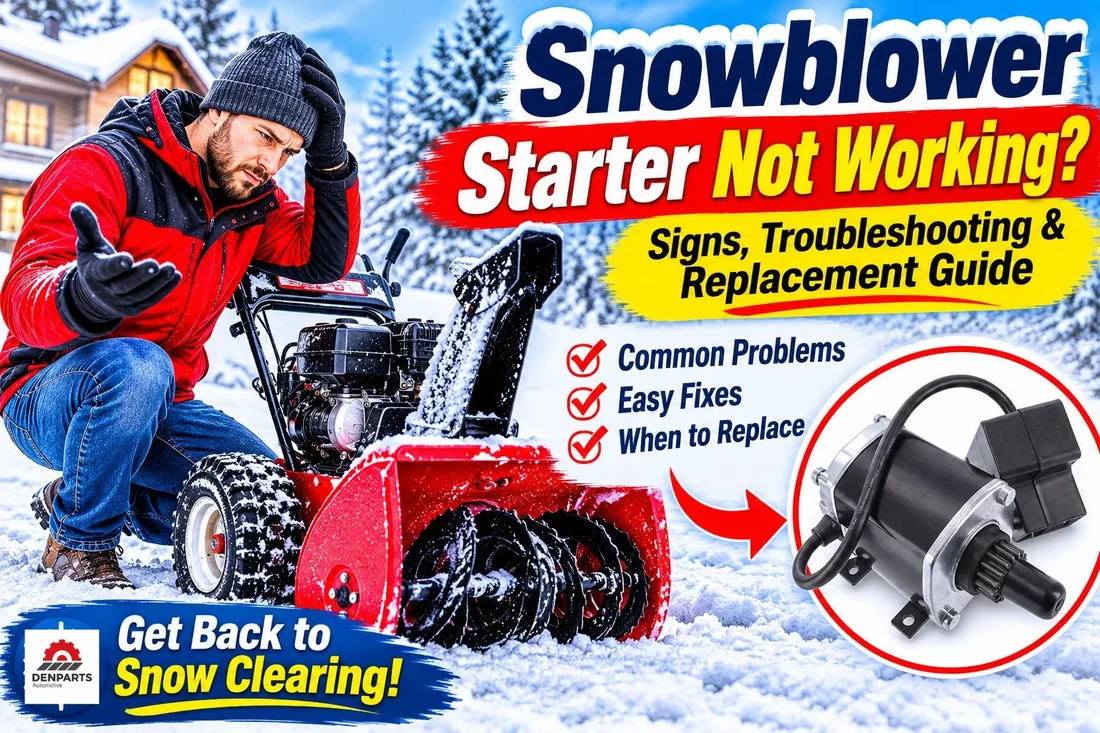
A snowblower is a machine that clears snow from driveways, paths, parking areas, etc. It gets the snow off quickly without the need to shovel it manually. Snowblowers work by using a rotating auger to scoop up the snow and then push it out through a discharge chute, away from the area. They're very useful in Canada where the snowfall in winter can be quite heavy and it's a real pain to clear the driveways and walkways.
How a Snowblower Starter WorksThe Snowblower starter motor uses a small gear to turn the flywheel (to get the engine going). When you switch on the electric starter the small gear moves into position to mesh with the teeth of the flywheel. Both gears have to be in the right place and work together. If the starter motor is loose or not correctly fitted the gears may not mesh properly and will wear down their teeth. Eventually this will lead to problems when you go to start the snowblower.
Signs Your Snowblower Starter Is Failing1. The Electric Starter Does Nothing
You press the button and get nothing. Check the outlet, the extension cable, the plug and any tripped breaker first as those are the usual culprits in the manual. If there's power getting to the machine and it’s still not going to live then the starter motor or switch is the next thing to check.
2. Clicking or Humming
On the battery start models, a click will generally point to a weak battery, loose or corroded terminals or a bad ground. On a plug-in starter, a hum with no turning will generally be down to a weak or long cord or a seized/worn motor. Always check the cord and connections before you go any further.
3. Slow Cranking
The engine will turn but it'll sound quite tired, particularly on a cold morning. Thick cold oil, a thin or too long extension cord, a weak battery (battery models) or a faulty starter can all be the cause. Always rule out the simple causes first.
4. Grinding Noise
A nasty scraping sound usually means the starter gear isn’t properly meshing with the flywheel teeth. Worn teeth, a loose starter or a bad drive can all be the cause. Stop cranking as repeated cranking can damage both the starter gear and the flywheel.
5. Starter Spins but the Engine Doesn’t Turn
You hear the motor running freely but the engine just doesn't move. The drive gear isn’t meshing with the flywheel so it's either a worn/broken starter drive or damaged flywheel teeth. That's almost certainly a mechanical fault so check the starter and drive first before you even consider the electrical side.
6. Pull Cord Won’t Retract
The rope stays out or crawls back very slowly. A weak or broken recoil spring is by far the most likely cause. A frayed or jammed rope, or a damaged pulley can also be the cause. Be careful as the recoil springs are very tightly wound and can snap out.
7. Pull Cord Has No Resistance
The rope pulls out freely and the engine doesn’t turn at all. That generally indicates the pawls (the little catches that engage the flywheel) are worn, stuck or broken, or the pulley engagement tabs have worn away. The pawl springs can also be at fault.
8. Starter Works Only Sometimes
It will work once and then not at all. This is typically indicative of an intermittent connection (worn cord, loose plug, bad switch, weak battery etc). It gets much worse in the cold so fix it before the next major snowfall.
Check These Things Before Blaming the Starter1. Check the Power Supply
Make sure the cord is pushed in properly at both ends and then test the outlet with a lamp or phone charger. Reset the GFCI and check for a tripped breaker. Check the extension cord for any cuts, crushed areas, corrosion or bent pins and replace it if it’s damaged. Most of the manuals will specify an outdoor rated, UL listed 16 gauge cord up to 50ft but always check what your particular manual says.
2. Check the Battery
This only applies to machines with a 12 volt battery start. The battery must be fully charged and the terminals clean and tight as cold weather will quickly kill a battery. If your snowblower is one that plugs into a wall outlet then you can skip this step entirely.
3. Check the Safety Key and Controls
A lot of snowblowers will fail to start if the key's missing or a control is in the wrong position. Make sure the key is in and the key is in the correct position and that the choke, primer, fuel shutoff and throttle are all in the correct positions as per your manual’s starting procedure.
4. Inspect the Spark Plug
This is important when the engine turns over but won’t fire. A dirty, cracked or incorrectly gapped plug can be the problem so have a good look at it and replace it if it’s damaged or badly fouled.
5. Check the Fuel Supply
Make sure the tank is full of fresh fuel. Fuel from last winter is a very common cause of hard starting. If it’s old then drain it and refill as per the manufacturers recommendation.
6. Inspect Electrical Connections
Loose wires, corroded terminals and damaged cables can be the reason why the starter isn't getting enough power. Have a good look at every connection you can see and ensure it’s clean, tight and properly secured.
7. Inspect the Starter Gear and Flywheel
Look for chipped, worn or missing teeth. If the gear can’t grip the flywheel the starter will spin and the engine won't turn at all. A loose starter mount can give the same problem, as well as grinding.
8. Check the Carburetor and Air Filter
A dirty carburetor or a clogged air filter won’t normally prevent the starter from cranking. They can, of course, stop the engine from firing or running at all once it has cranked.
Safety NoteBefore you go anywhere near your snowblower for inspection or repair, turn it off, remove the key, let it cool and disconnect the spark plug lead so it can't accidentally start. If it's an electric start unit you'll need to use an outdoor rated extension cord and never operate a snowblower in a closed garage as the engine exhaust will contain carbon monoxide.
Why Cold Weather Makes Starter Problems Worse
Cold weather makes starter problems much worse as it has an effect on both the engine and the starting system. The engine oil is thicker in the cold which increases the resistance within the engine and makes it much harder for the starter to turn the engine over. The battery also delivers less power in the cold so the starter will crank slowly or may simply not start the engine at all.
A starter that was good in October may well be a struggle in January particularly if the battery's in a weak state or the connections are corroded. The cold itself can also make the plastic cord insulation stiff and more prone to cracking.
Don't hold the electric start button for long periods as continuous cranking will overheat and damage the starter. Adhere to the crank time limits and cold start instructions in your snowblower manual, including the correct choke and primer settings.
If the engine won't start after a few properly executed attempts then stop cranking and check the fuel, spark plug, battery/power cord, safety controls, oil level etc. More cranking won't solve a fuel, spark or mechanical problem.
Repair or Replace a Snowblower Starter?If your snowblower starter isn't working then check the power outlet, extension cord, starter switch, wiring and starter gear to establish exactly what the fault is. A number of minor issues (loose wires, dirty connections, faulty switch etc) may simply be rectified. If however the starter motor is burnt out, damaged or has failed internally then it's usually the case that the whole assembly will have to be replaced.
Before fitting a new starter, sort out any underlying electrical or mechanical faults as that will help to prevent damage to the new unit.
When to Consider Repair1. Loose or disconnected wiring
2. Dirty or corroded electrical connections
3. A faulty starter switch
4. A starter gear that is dirty, binding, worn, or not engaging properly
5. Replaceable recoil-starter parts, such as the pull rope, handle, recoil spring, or pulley
When to Consider Replacement1. A burnt-out or failed starter motor
2. A cracked or severely damaged starter housing
3. Worn or damaged internal components that cannot be serviced
4. A starter gear with missing, chipped, or badly worn teeth
5. A starter that makes grinding noises, spins without turning the engine, or works only intermittently
6. A starter assembly identified as non-serviceable in the manufacturer’s manual
Common Mistakes When Buying a Replacement StarterThis is where people lose the most time, so slow down here.
Buying by machine brand alone: Many snowblowers share engines, but the starter fits the engine, not just the brand name on the machine. Write down the engine make, model and type number, and the snowblower model number.
Mixing up voltage types: A 120-volt household-powered starter and a battery-powered starter are different parts. Confirm which one you have.
Ignoring mounting and drive details: Mounting holes, the shape of the drive end and the number of teeth must match your engine. Compare the old starter closely with the new part before installing.
Skipping the cord and plug: If the old starter died from a bad power cord or socket, fix that as well.
Waiting until the first big storm: Parts can take time to ship across Canada in winter. Checking the starter in the fall gives you time to order calmly.
How to Install an Electric Starter on your SnowblowerTurn Off the Snowblower: Turn off the machine, remove the ignition key, let the engine cool, disconnect the spark plug wire, and unplug the electric starter from the power outlet.
Locate the Starter Motor: Find the electric starter attached to the engine and identify its mounting bolts, electrical connections, and starter gear.
Disconnect the Wiring: Photograph or label the wiring, then carefully disconnect the electrical connections before removing the old starter.
Remove the Old Starter: Use the appropriate tools to loosen and remove the mounting bolts, then carefully remove the existing starter motor.
Check the Replacement Starter: Compare the new starter with the old one. Check the part number, voltage, mounting holes, rotation direction, gear or tooth count, and overall fit.
Install the New Starter: Position the replacement starter correctly, align it with the mounting holes, and tighten the mounting bolts according to the manufacturer’s torque specifications.
Reconnect the Wiring: Reattach all electrical connections securely, following the correct wiring arrangement and routing shown in your snowblower’s manual.
Check Starter Engagement: Before final testing, make sure the starter gear engages the flywheel properly and does not rub, bind, or grind.
Test the Starter: Reconnect the spark-plug wire and power source, then follow the manufacturer’s starting procedure to check whether the starter engages and turns the engine properly.
Final ThoughtsA snowblower that will not start is stressful, but a calm, step-by-step check usually finds the cause. Start with the outlet and cord, rule out fuel and spark, and only then decide whether the starter needs replacing. When it does, take the time to match the engine model and part number so the new starter fits the first time.
If you need a replacement, browse the starter motors at denpart, search by part number or engine details, and reach out to the team if you want a second opinion on compatibility. A little preparation before the next snowfall can save you a very cold morning.
FAQsHow does the starter work on a snowblower?
When you activate the electric starter, its small gear engages with the flywheel gear and turns the engine to help it start. If the starter becomes loose or the gears do not align properly, their teeth can wear down or become damaged.
Why won't my electric starter work?
An electric starter may stop working because of a weak battery, damaged power cord, loose wiring, faulty connections or a bad starter solenoid. Check these components before deciding that the starter motor needs replacement.
Can you add an electric start to a snow blower?
Yes, some snowblowers can be fitted with an electric starter, but it depends on the engine and machine model. Check whether your engine supports an electric-start system and whether compatible starter components are available.
How many watts to electric start a snowblower?
A typical 120V electric snowblower starter may use approximately 1,200 watts, although the actual requirement varies by model. Always check the manufacturer's specifications for the correct power requirements.
What types of snowblower starters does Denparts sell?
Denparts sells electric (plug-in) starters for gas snowblowers, including options for Tecumseh, Toro, Ariens, Cub Cadet and John Deere engines. Match your engine model and old starter’s part number before ordering, or contact the Denparts team to confirm the fit.