 Australia
 Cayman Islands
 Dominican Republic
 Hong Kong
 India
India
 Indonesia
 Ireland
 Jamaica
 New Zealand
 Singapore
 Thailand
 United Kingdom
 United States
 Vietnam

Every few months we get the same call.
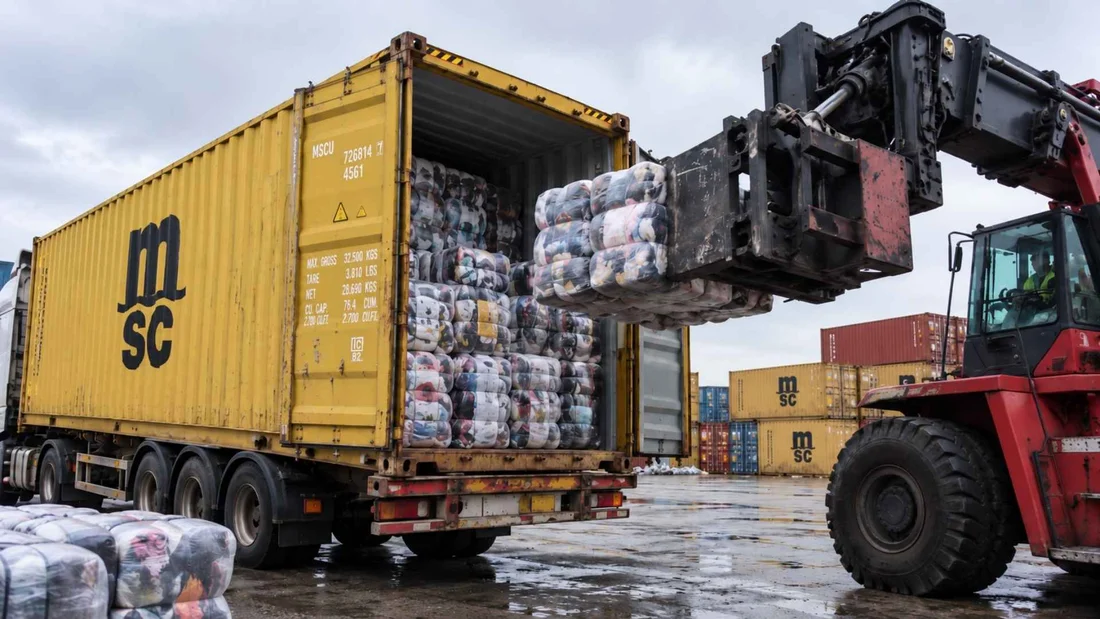
A Canadian exporter has bales loaded, a buyer in India ready to pay, and a container booked. Then the shipment lands at an Indian port and stops moving. Storage charges start. The buyer goes quiet. Nobody can explain what went wrong.
Usually, it is the same thing.
Worn clothing is a restricted import in India.
Under HS Code 6309, second-hand clothing falls under restricted import rules. That means your buyer in India may need authorization from the Directorate General of Foreign Trade before the goods can legally be imported.
A signed purchase order is not import authorization. The buyer agreeing to buy your cargo tells you nothing about whether they are allowed to clear it.
Before anything gets booked, confirm your consignee:
→ Has a valid Importer Exporter Code (IEC)
→ Understands the DGFT requirements for worn clothing
→ Holds the necessary import authorization
→ Has arranged customs clearance at destination
Ask for it in writing. It is a two-minute conversation that prevents a two-month problem.
The second issue is classification.
Wearable second-hand clothing and textile rags are not the same cargo in the eyes of customs.
Used wearable clothing generally falls under HS 6309. Textile rags and waste generally fall under HS 6310.
Declaring one as the other to make clearance easier is a short-term decision with long-term consequences. And describing your cargo as "mixed textiles" does not help anyone. Customs will ask, your documents will need correcting, and your container will sit while that happens.
The commercial invoice, packing list, HS code and cargo description all need to say the same thing.
The third issue is sequence.
Most exporters plan a shipment in this order: find a buyer, pack the bales, book the container, sort the paperwork.
Flip it.
Confirm import requirements → verify HS code → prepare documents → pack bales → select container → book ocean freight
Compliance first. It is far easier to solve an import problem while the goods are still sitting in Canada than after they have crossed an ocean.
A few practical things that get overlooked:
Bales need to be dry. Moisture during a long ocean transit damages clothing and creates problems at destination that nobody wants to own.
Bale count and weights on the packing list need to match what is actually in the container. Small discrepancies invite big questions.
A cheap ocean rate is not a cheap shipment. Destination port charges, customs clearance, duties, inspections and storage all land on the same invoice eventually.
Container choice depends on your volume. Most used clothing exporters end up looking at 40ft or 40ft high cube equipment, because the commodity takes volume before it takes weight.
Where most exporters actually get stuck
It is rarely the freight. It is the paperwork that nobody confirmed until the container was already on the water.
If you are moving used clothing out of Canada, drop a comment or send me a message and I will share the full checklist we use with exporters before booking.
Golden Freight Forwarding & Marketing Inc.
Recently ranked No. 208 on The Globe and Mail's Canada's Top Growing Companies 2026.