 Australia
 Cayman Islands
 Dominican Republic
 Hong Kong
 India
India
 Indonesia
 Ireland
 Jamaica
 New Zealand
 Singapore
 Thailand
 United Kingdom
 United States
 Vietnam

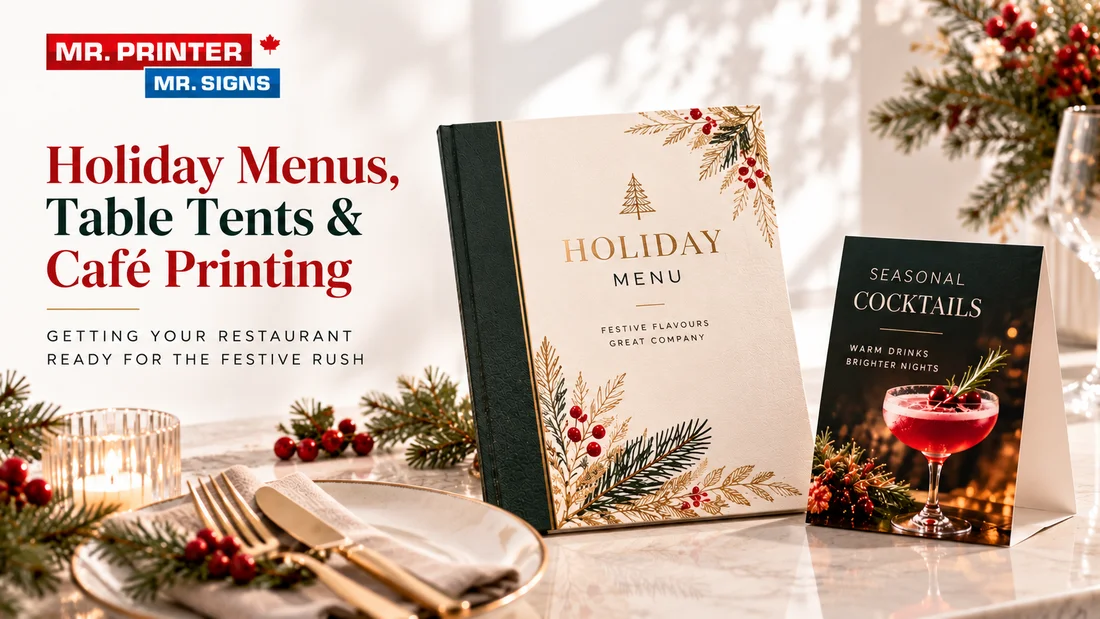
For most Toronto restaurants, the six weeks between mid-November and New Year's Eve account for a disproportionate share of the year's revenue. Group bookings, office parties, prix fixe nights, and walk-in traffic from holiday shoppers all land at once.
And every one of those guests interacts with the same object: your menu.
This is a practical guide to menu printing in Toronto for the holiday season — materials that survive heavy service, how table tents actually increase average cheque, and when to order so you are not reprinting mid-December.
Why Seasonal Menus Earn Their CostA separate holiday menu is not just decoration. It does three commercial jobs:
● It justifies different pricing. A prix fixe or festive menu lets you set a per-head price for groups without appearing to raise prices on your regular offering.
● It simplifies the kitchen. A tighter seasonal menu means faster tickets during your busiest service of the year.
● It creates urgency. "Available until January 5" converts a maybe into a booking.
Choosing a Menu Material That Survives ServiceRestaurant menus fail in predictable ways: grease marks, bent corners, water staining, and that soft, limp feel a menu gets after three weeks of handling. Material choice decides how long yours lasts.
Option
Durability
Best for
Standard paper insert
Days to weeks
Daily specials, frequently changing items
Heavy cardstock
Several weeks
Seasonal and limited-time menus
Laminated menu
Months
Core menus in high-volume service
Printed insert in a holder
Reusable holder
Restaurants changing menus often
For a six-week holiday menu, heavy cardstock usually hits the right balance — it holds up through the season without the cost or the plastic feel of full lamination. Most restaurants print custom menus in a short seasonal run and return to their standard menu in January.
Table Tents: The Most Underused Tool on the TableA table tent card sits in front of a guest for the entire meal, at eye level, with no competition. It is the only piece of in-restaurant marketing with a guaranteed captive audience.
What to put on them during the holiday season, in order of return:
● Private party and group booking availability — this is the highest-value message in December. Guests dining with you are often the same people choosing where to hold the office dinner.
● Gift card promotion — gift cards are near-pure margin, and a table tent is the cheapest way to sell them.
● Seasonal cocktails or dessert — a photographed item on a table tent measurably lifts attachment rate.
● New Year's Eve reservations — start promoting these in late November, not late December.
Printed table tent cards are inexpensive enough that most restaurants run two or three versions across the season and rotate them.
Design Rules Specific to Restaurant Printing● Type size over style. Restaurant lighting in December is dim and decorative. If a 55-year-old guest cannot read your menu without using their phone flashlight, the design has failed.
● Describe, do not list. A short descriptive line next to a dish raises its order rate. "Braised short rib, red wine jus, celeriac purée" sells better than "Short rib."
● Position your high-margin items deliberately. The upper right area of a menu page draws the eye first. Put the dishes you want to sell there.
● Avoid dollar signs and aligned price columns. Prices set immediately after the description, without a leader line or a column, reduce price comparison shopping.
Outside the Door: Capturing Holiday Foot TrafficDecember brings shoppers onto the sidewalk who had no particular plan for lunch. An A-frame sidewalk sign showing a festive menu or a group booking message converts that traffic at street level, where your window menu cannot.
One message per board, large type, and change it daily if you can — pedestrians notice a board that changes.
The Ordering Timeline● Mid-October — finalize seasonal menu and pricing with the kitchen
● Late October — design and proof menus and table tents
● Early November — print; menus in service before group bookings begin
● Mid-November — table tents promoting NYE and gift cards go out
The common mistake is printing in early December, after group bookings have already been made elsewhere. Your holiday menu needs to exist before the person planning the office dinner starts calling around — and that happens in November.
Frequently Asked QuestionsWhat is the best material for restaurant menus?Heavy cardstock for seasonal and limited-time menus; laminated stock for core menus in high-volume service. Standard paper suits daily-changing specials.
When should restaurants print holiday menus in Canada?Print in early November. Group and office party bookings are typically made in November, so the menu must be available before then.
Do table tent cards actually increase sales?Yes. They sit at eye level for the full meal with no competing message, which makes them particularly effective for gift cards, desserts, cocktails, and group booking promotion.
How many menus should a restaurant print?Allow roughly one menu per two seats, plus 20 percent for damage and replacement across a busy season.
The TakeawayThe restaurants that do well in December are rarely the ones with the best decorations. They are the ones whose holiday menu was printed in early November, whose table tents were selling gift cards and New Year's reservations by mid-month, and whose sidewalk board gave a cold shopper a reason to come in.
Mr. Printer and Mr. Signs prints menus, table tents, and signage for restaurants and cafés across the Greater Toronto Area from 518 Evans Avenue, Etobicoke. Serving Toronto, Etobicoke, Mississauga, Vaughan and Brampton since 1978 — www.mrprinter.ca — 416-252-3341.