 Australia
 Cayman Islands
 Dominican Republic
 Hong Kong
 India
 Indonesia
 Ireland
 Jamaica
 New Zealand
 Singapore
 Thailand
 United Kingdom
 United States
 Vietnam

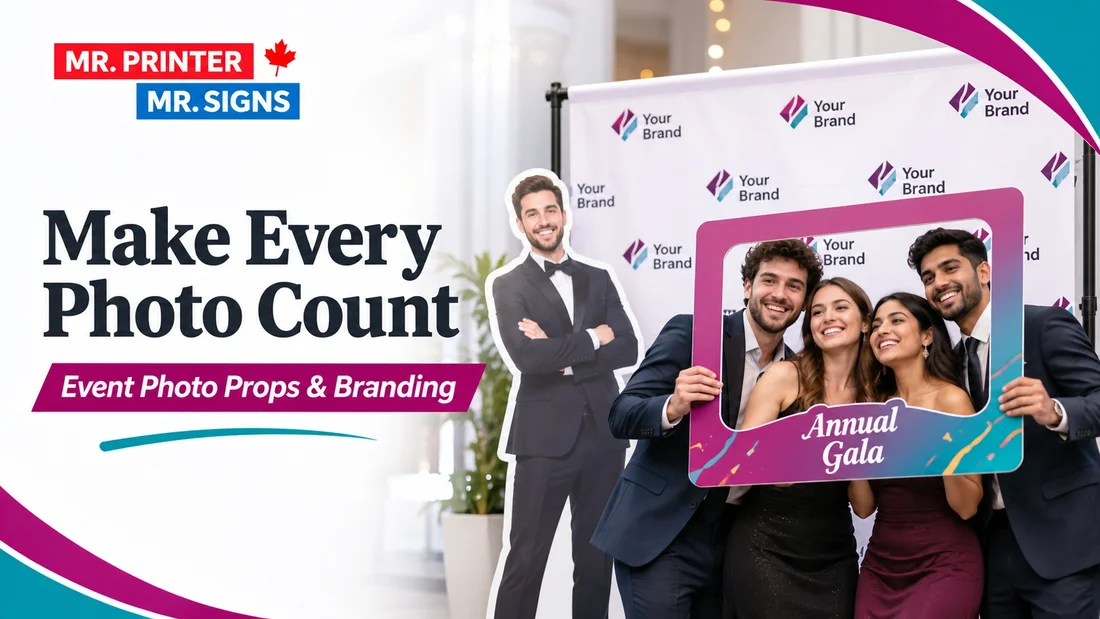
Think about the last event you attended — a corporate function, a charity gala, a sports banquet, a product launch. Now try to remember the venue, the catering, the lighting rig or the AV setup.
Most people cannot. What they remember, if anything, is the one thing they stood in front of and photographed.
That is worth sitting with, because the photo-op is usually the smallest line in an event budget and almost always the only element that produces anything after the room empties.
Everything Else Is Consumed on the NightEvent spending divides cleanly into two categories, and most organisers never make the distinction.
The first category is consumed and gone: food, drink, venue hire, AV, staffing, flowers. Essential, and worth every dollar, but the value ends when the event ends.
The second category keeps producing: anything that generates a photograph. Every image a guest takes and posts carries your event, your brand or your cause to an audience you did not invite and did not pay to reach. Those photographs circulate for weeks, reappear in next year's promotion, and are still being used in annual reports and recruitment material long afterwards.
Which means the question for any event is not whether to have a photo-op, but whether the one you have is actually worth photographing.
The Four Formats, and What Each Is Good AtPhoto props are not interchangeable. Each solves a different problem.
Format
What it does
Best suited to
Life-size cutout
Gives guests a person or character to pose beside
Launches, themed events, mascots, celebrations, retail
Big head cutout
Handheld oversized face — generates reaction, not just a pose
Sports events, parties, graduations, fundraisers
Selfie frame
Carries branding into every photo taken through it
Conferences, trade shows, campaigns with a hashtag
Step-and-repeat backdrop
Puts logos behind every photo taken in that spot all evening
Galas, awards evenings, sponsor-funded events
Life-size cutouts
A full-height standee gives people a reason to stop. Weddings use them for absent relatives, launches use them for products, charities use them for ambassadors, and retailers use them for seasonal characters.
The practical note: custom life-size cutouts print from a supplied photograph, so image quality at the source governs everything. A photo taken on a modern phone at full resolution usually enlarges well. An image pulled from social media will not — it will print soft at life size, and no amount of production can recover detail that was never captured.
Big head cutoutsThe handheld oversized face does something the others do not: it produces a reaction rather than a pose. People laugh, hold it up, and film each other with it — which is why they travel further on social media than any other prop.
Sports clubs, schools, graduations and fundraisers get the most from them, and big head cutouts are inexpensive enough to order several and let guests take them home. A prop that leaves the venue keeps circulating.
Selfie framesA handheld frame is the most portable option and the only one that travels around the room rather than waiting for guests to come to it. The branding sits in the frame itself, so every photo taken through it carries your event name or hashtag without anyone having to remember it.
Selfie frame cutout props work particularly well at conferences and campaigns, where the goal is volume of branded images rather than one carefully composed shot.
Step-and-repeat backdropsThe repeating logo wall exists for one reason: it guarantees branding appears in every photograph taken in front of it, at any crop, from any angle. For sponsor-funded events this is often a contractual requirement, and it is the single most reliable way to demonstrate sponsor visibility afterwards.
Telescopic backdrop stands adjust in width and height, which matters if you run more than one event a year in different rooms. A fixed-size frame fits one venue; an adjustable one fits all of them.
Where Most Photo-Ops FailHaving paid for a prop, organisers routinely undermine it with placement and lighting. Five recurring problems:
1. Put against a wall with no space to stand backA backdrop needs roughly two to three metres of clear floor in front of it. Without that, every photograph is taken from too close, at an upward angle, and cuts off the branding at the top. Clear the space before guests arrive — once the room fills, it will not happen.
2. Positioned where nobody walksA photo wall in a corner near the service entrance will be used by nobody. Place it somewhere guests pass naturally — near the entrance, the bar or the registration desk — where it is seen on arrival while people are still taking photographs.
3. Lit from behindA window or a bright light source behind the subject turns everyone into a silhouette. Light should come from behind the photographer. If the venue lighting is dim, as it usually is at evening events, a single additional light aimed at the backdrop transforms every image taken that night.
4. Branding placed too lowOn a step-and-repeat, the logos that matter should sit at head height and above. Anything below waist level disappears behind the people standing in front of it.
5. Nobody is told it existsThe most common failure of all. A sign, a mention from the stage, or a staff member who actively invites guests to use it will multiply the number of photographs taken. A prop standing silently in a corner gets a fraction of the use it should.
A Note on Lead TimePhoto props are usually decided late — frequently in the final week, once the important decisions are made. That is manageable for simple pieces, but it removes the margin for the things that actually need time: checking that a supplied photograph is high enough resolution, proofing sponsor logos, and confirming sizing against the room.
Two to three weeks is comfortable. The constraint is rarely production speed — it is the back-and-forth over artwork, which is the part nobody budgets time for.
Frequently Asked Questions What resolution photo is needed for a life-size cutout?A high-resolution original, ideally shot on a modern phone or camera at full quality. Images saved from social media are compressed and will print soft at full size — the detail cannot be recovered after the fact.
How much space does a step-and-repeat backdrop need?Allow two to three metres of clear floor in front of the backdrop so photographs can be taken straight on rather than at an upward angle, plus room either side for groups.
What is the difference between a selfie frame and a photo backdrop?A selfie frame is handheld and moves around the room, branding every photo taken through it. A backdrop is fixed in one position and brands every photo taken in front of it. Many events use both.
Where should a photo-op be positioned at an event?Somewhere guests pass naturally — near the entrance, bar or registration desk — with clear floor space in front and lighting coming from the photographer's side rather than from behind the subject.
How far in advance should event photo props be ordered?Two to three weeks. Production itself is quick; the time is needed for artwork checks, logo proofing and confirming sizing against the venue.
The Practical TakeawayEvery other line in an event budget is spent on the experience in the room. The photo-op is the only one spent on what leaves the room — and it is usually the cheapest item on the list.
Decide what you want people photographing, give it clear floor space and decent light, put it where guests actually walk, and tell them it is there. Four simple things, and they are the difference between a prop nobody used and a hundred branded photographs circulating for the next year.
About the author: This article was contributed by the team at Mr. Printer and Mr. Signs, a family-owned printing and signage company operating from 518 Evans Avenue, Etobicoke, Ontario since 1978. They produce custom cutouts, big head cutouts, selfie frames, backdrops and event signage for events across Toronto, Etobicoke, Mississauga, Vaughan, Brampton and the Greater Toronto Area. Learn more at www.mrprinter.ca or call 416-252-3341.