
 Australia
 Cayman Islands
 Dominican Republic
 Hong Kong
 India
India
 Indonesia
 Ireland
 Jamaica
 New Zealand
 Singapore
 Thailand
 United Kingdom
 United States
 Vietnam

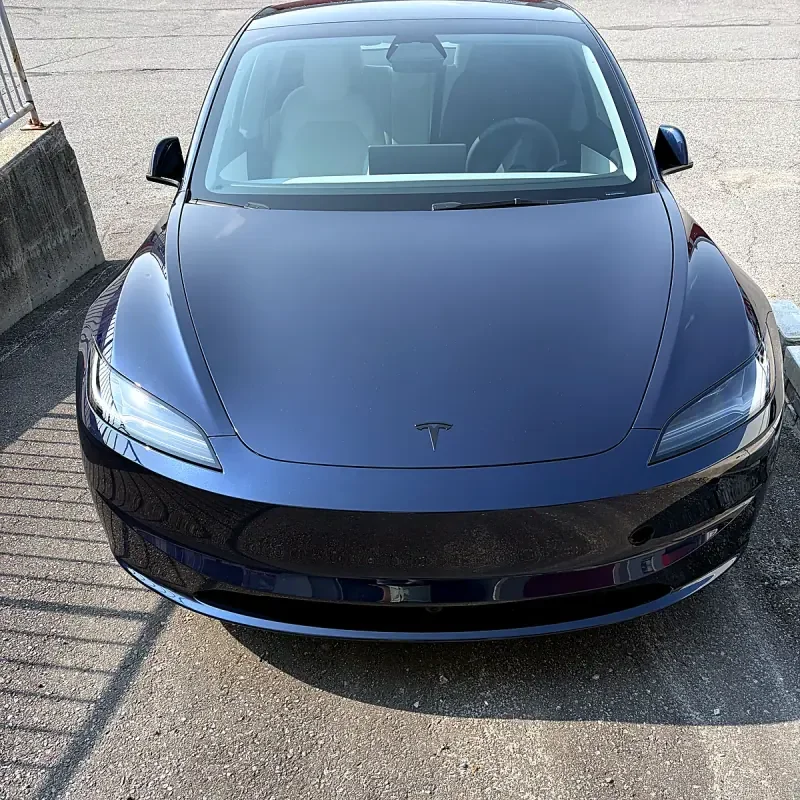
Paint protection film is worth it on some Ottawa cars and a poor buy on others, and the difference is not the badge on the hood. It comes down to what you drive on, how long you plan to keep the car, and what the paint is worth to you. This guide works through the real downsides, what the film stops on the 417 and the 174, and the cases where we tell people to keep their money.
Is paint protection film really worth it?Sometimes. That is the honest answer. On some ordinary cars film is a waste of money, and on a car that runs the 417 every weekday it is not.
Whether it pays for itself comes down to three things. The first is what you drive on. A commuter that spends its mornings behind aggregate trucks between Kanata and downtown collects chips at a rate a car that stays inside the Greenbelt never sees. The second is how long you keep the car. Film is a cost you pay once and recover over years, so a car that leaves in twelve months rarely earns it back. The third is what the paint is worth to you, which is a question of taste as much as money: some owners can live with a peppered hood and some cannot look at it.
What does PPF actually stop in Ottawa?Stones, mostly. The 417 between Moodie Drive and Eagleson Road has been under construction on and off for years, and its lanes carry a steady run of transport and gravel trucks that throw aggregate at whatever is following them. The 174 through Orléans does the same where construction has scattered loose stone across the lanes. The front bumper takes the small hits, the leading edge of the hood takes the ones that break through the clear coat, and a mirror cap can lose a chip a month without anyone noticing until the spring wash.
Then there is the brine season, November to April. Salt brine goes down on the highway ahead of a storm, sand goes down on top of it, and the two make a slurry that finds every existing chip and starts lifting the paint around it. Film gives the salt nothing to get behind. Out past Kanata, the gravel shoulders around Carp and the estate roads around Greely do their damage at 60 km/h instead of 100.
The arithmetic is short. A proper chip repair runs $200 to $800 per chip at a body shop, and a panel repaint starts around $1,500. A dozen chips is an ordinary winter on the 417. A partial front sits between those repairs and your paint for years, and the PPF page lists what each level of coverage includes.
What is the downside of PPF?The price is the first one. Film costs more than a ceramic coating over the same panels and far more than doing nothing, and the money is spent whether or not a stone ever reaches the car.
The rest of the list depends on who installs it. Cheap film has orange peel, a texture you see in the reflection of a streetlight. A rushed install leaves edges that stop short of the panel gap and dirt sealed under the film. Film locks in whatever is beneath it, so a swirl or a chip that was there on install day is there for the life of the film. Old-generation film yellowed, and a bargain roll bought online still can. Removal over a repainted panel can lift the repaint with it.
A good install removes most of that. We wash and decontaminate the paint before any film goes on, tuck every edge into the panel gap so nothing stands proud, and check for repainted panels at the quote, while you can still say no. What no installer removes is the price, or the possibility that you are paying to protect paint you would have lived with anyway.